Vietnamese workers: where New Zealand's AI spending leaves a gap for people with skills
Tips · 2026-09-16 · 3 min read
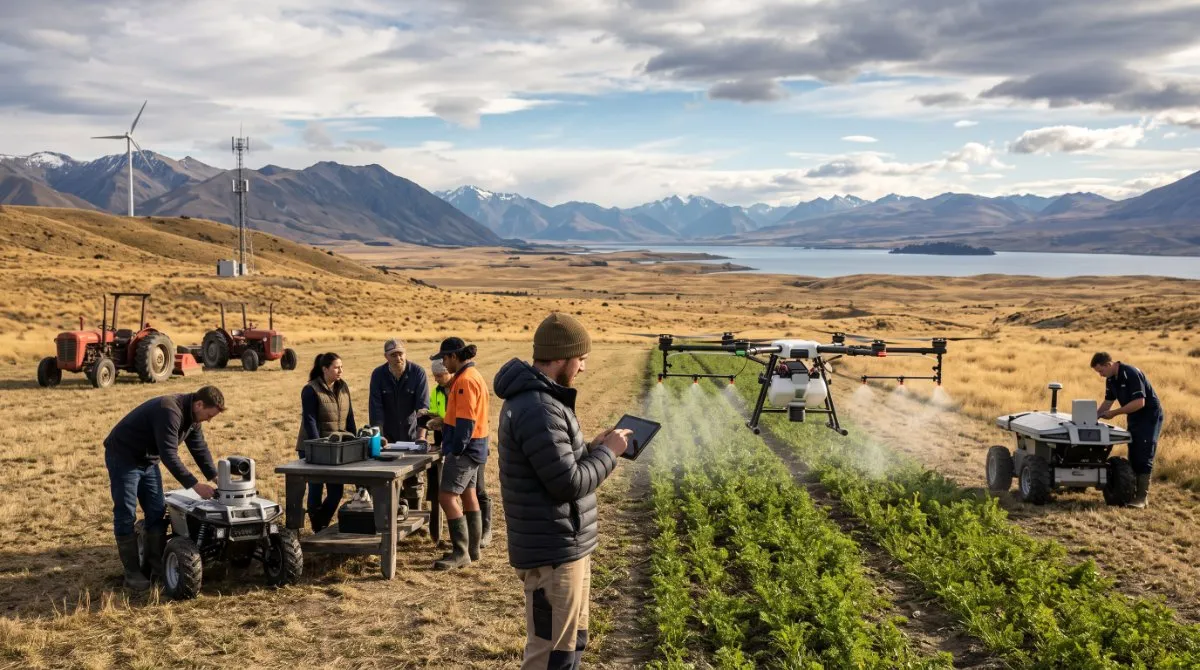
Do robots and AI take away jobs? In New Zealand, the answer is more interesting than yes or no. A new look at the market shows that companies are spending a lot on technology, but not much on people. For workers like you, that gap can be useful to understand.
One number to remember
93% of AI spending in New Zealand organisations goes to technology. Only 7% goes to people and skills. New Zealand also has an ageing workforce and a shortage of workers in some regions. So companies are buying tools faster than they are training people to use them.
Buying a tool is not enough
Imagine a company adds a chatbot to an old process. Nothing else changes. The job is the same and the team is the same. This is called shallow adoption. Around the world, only about one in eight organisations has moved agentic AI into real use. Agentic AI means AI that can carry out tasks by itself. Most companies are still only testing it.
The companies that do best change how work is done. They give people new roles. They train them. They look for special skills.
Work that may change
AI and robots are starting to do tasks that are repeated, boring or dangerous. This is happening in agriculture, utilities, infrastructure inspection and transport. New Zealand is a spread-out country, so these areas already find it hard to find staff.
People are still needed, but the jobs look different. Employers may look for:
- People who can run and repair automatic machines.
- Workers for regional and infrastructure jobs, where drones and remote robots are growing fast.
- Local people who are trained for better roles, and also skilled people from other countries when local skills are not enough.
Why safety skills matter
AI also helps criminals. Automatic tools can send fake emails and search for weak systems faster than people can react. Airports, hospitals and transport systems use more digital tools every year. So careful, trained workers are very important.
What you can do now
This is not a promise of jobs. It is a direction to think about. Here are small steps:
- Write down the machines and tools you already use at work.
- Check how your Vietnamese vocational certificate or degree will be recognised in New Zealand. Some trades, such as electrical and plumbing work, need occupational registration.
- Plan an IELTS or PTE test if the employer or visa needs one.
- Get certified English translations of your documents when the rules ask for them.
- If a police certificate is requested, a Vietnamese citizen usually needs the Judicial Record Certificate No. 2 (Phiếu lý lịch tư pháp số 2).
For official information about working in New Zealand, visit the Immigration New Zealand work page.
Stay safe while you search
Deal only with licensed organisations and real employers. Never pay an unlicensed broker. Be careful with anyone who asks for money upfront to secure a job or a visa.
The tools are already being bought. People who can use them well are still rare. With patience and good preparation, you can become one of them.
#new zealand #ai and jobs #skills #vietnamese workers #work in new zealand from vietnam
 Vietnamese workers with AI skills: could New Zealand employers want you?
 Vietnamese plumbers: is New Zealand looking for experienced hands?
 New Zealand's job ads are growing again: a closer look for Vietnamese workers