Vietnamese farm workers: could New Zealand's new training plan help your career?
Employer update · 2026-09-01 · 3 min read
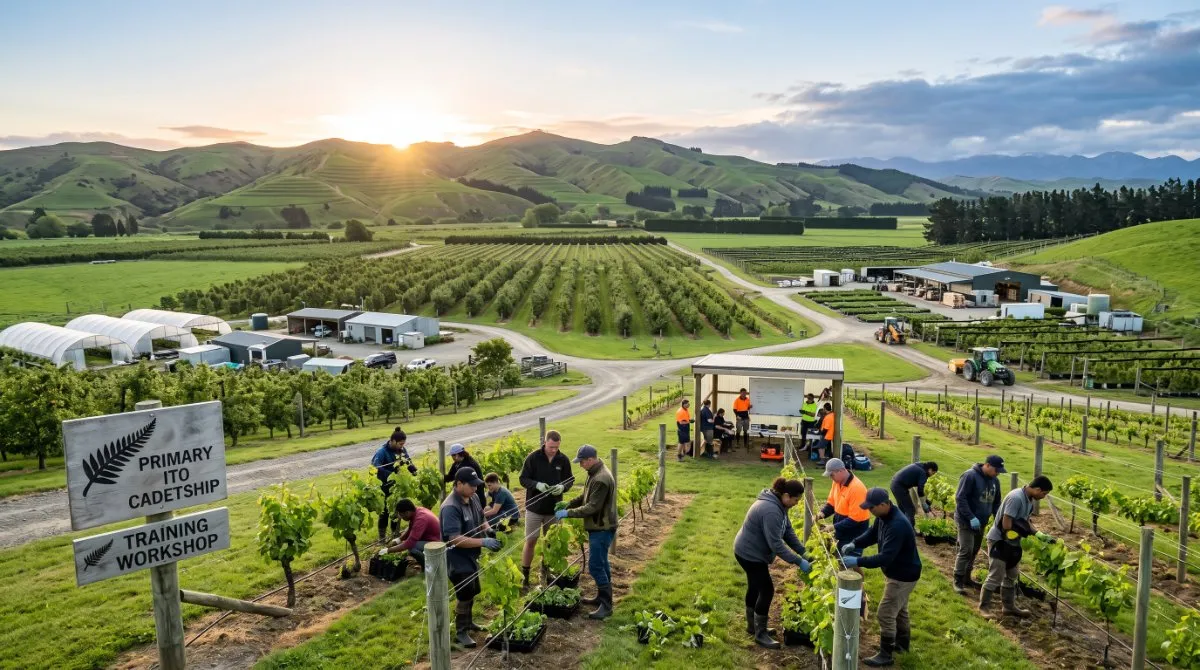
Many people in New Zealand's fruit and vegetable industry are migrant workers. If you want to work on an orchard or in a packhouse one day, the way the country trains these workers is changing. Here is what you should know, in simple words.
What is happening
From 1 January 2026, work-based training in horticulture will move from Te Pūkenga to a new, temporary group. Its name is the Food and Fibre Industry Skills Board. Horticulture means growing fruit, vegetables and plants. Work-based training means you learn while you do the job.
A hopeful idea for visa holders
A new workforce plan for the sector includes an idea to restore training rights for workers on work visas. This matters. Right now, it is hard for visa holders to earn recognised work-based qualifications.
If the idea becomes real, a worker could start with general jobs and grow into more skilled and better-paid work. Employers would also keep trained people for longer. Please remember that this is a proposal. It is not yet a rule.
Why the industry is worried
Between 2021 and 2024, work-based enrolments in fruit and vegetable training fell by about two-thirds. The local workforce is also getting older. This is one reason why employers use workers from other countries.
The plan, step by step
- Until the end of 2027: Primary ITO continues the training for about 1,500 current learners.
- By June 2027: no new learners can join under the current system.
- By 2028: regional polytechnics and private training providers are expected to deliver the training. The Skills Board will only set the standards.
Horticulture New Zealand and Primary ITO have warned about one risk. Some training providers may not offer smaller courses if those courses do not make enough money. Then some skill paths could disappear, including paths that help a worker move toward a skilled visa or residence.
A good example
Primary ITO runs a Horticulture Cadetship Programme. It began in Pukekohe and is now growing in the Bay of Plenty. Learners study with a group of peers. An advisor helps with training paperwork for the employer. This is a helpful model.
What you can do now
- Write a simple list of your farm or garden experience in English.
- Keep your certificates. Vietnamese vocational certificates are often checked again abroad, so ask what applies to your work.
- Prepare certified English translations if visa rules ask for them.
- Ask if an IELTS or PTE test is needed.
- If a police certificate is requested, the usual one is the Judicial Record Certificate (Phiếu lý lịch tư pháp).
Be careful and stay safe
Deal only with licensed organisations and real employers. Never pay an unlicensed broker. If someone asks for money upfront to secure a job or a visa, be very careful and ask questions first.
Read the current visa rules on the official Immigration New Zealand work page.
The main message
Training pathways in this industry will look different by 2028. Stay calm and informed. Learn about the changes over the next 18 months, and keep building your skills step by step.
#orchard jobs #horticulture #new zealand #training #work visa #vietnamese workers
 Vietnamese workers: what a plan to move 130 jobs to Australia says about job safety
 Some New Zealand visas were approved without an officer: what Vietnamese applicants can do
 Vietnamese workers: where New Zealand's AI spending leaves a gap for people with skills