Western Australia's meat and pork jobs: why some employers fear visa delays
News · 2026-09-07 · 3 min read
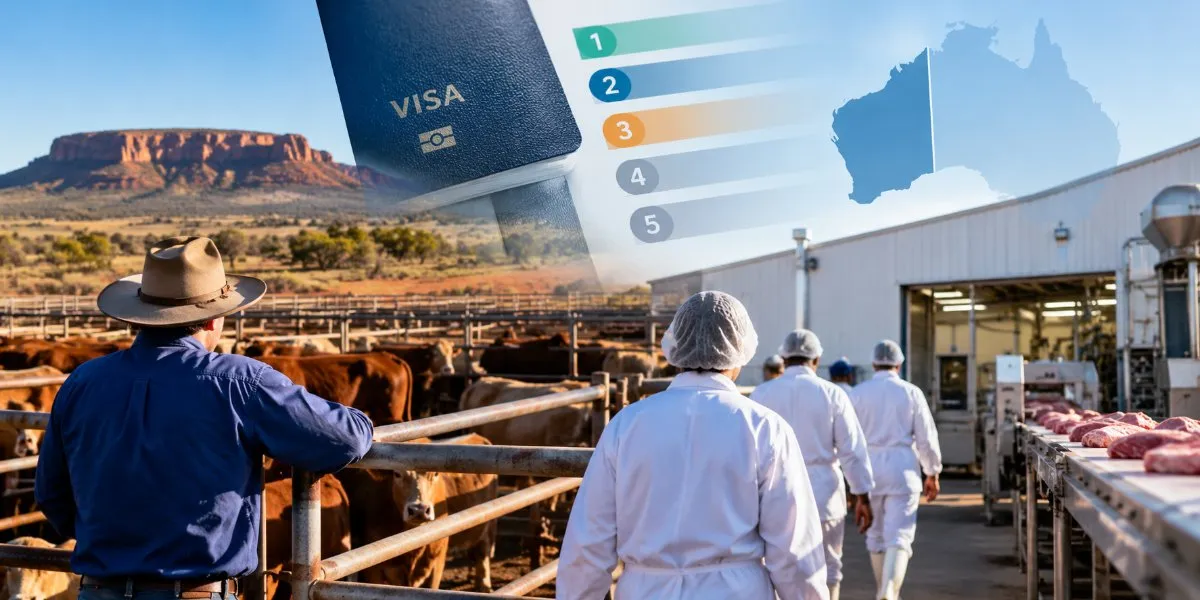
Meat and pork jobs in Western Australia need many workers. Many employers cannot find them locally, so they hire from overseas. But a new visa rule has created a problem. This guide explains it in simple words, so you can plan with open eyes.
What changed in July
In July, the Department of Home Affairs began using a five-tier order for visa applications. Some applications are handled first. Others wait. Offshore applicants are people who apply from outside Australia. If they work in an industry other than law enforcement, defence, construction, healthcare or teaching, they sit at the very bottom.
Meat processing is not on the priority list. Pork production is not on it either.
A story from the Kimberley
Near Broome, an abattoir advertised 60 skilled jobs. It received only one application from an Australian resident. That person did not have the needed skills. So the business planned to bring around 30 skilled workers from overseas, plus 13 partners.
The visa fees, about $390,000, were already paid. Then the delay came. The opening planned for this year moved to a soft launch in February and a full opening in April. Many cattle are waiting in the meantime.
A story from near Narrogin
A pig farm near Narrogin has a similar problem. About 90 per cent of its workers come from overseas. The farm is growing from 1,500 to 2,500 sows. Piglets are due in six months. The owner does not know if the new workers will have visas in time. Many were chosen in January. Some even left their old jobs.
What we can learn
Three plans must move together. First is the employer's hiring plan. Second is the visa processing time. Third is the farm or factory calendar. Animals do not wait for a visa. The Department says applications continue to be processed under established arrangements. Employers who use the Meat Industry Labour Agreement say this does not tell them when to expect a result.
These employers are not looking for cheap workers. In remote places, local people simply do not apply, even for good pay.
Tips for Vietnamese applicants
- Do not leave your current job until you know the visa result.
- Ask the employer which visa path they use and where your case is now.
- Prepare certified English translations of your Vietnamese documents. Visa rules may ask for them.
- If a police certificate is requested, get the Judicial Record Certificate (Phiếu lý lịch tư pháp), the usual one for Vietnamese citizens.
- Check if you need an English test such as IELTS or PTE.
- Check whether your work skills need to be recognised in Australia. Vietnamese certificates are usually assessed again abroad.
Stay safe, too. Deal only with licensed organisations and real employers. Never pay an unlicensed broker. Be careful if someone asks for money upfront to secure a job or a visa. Read the official visa information on the Department of Home Affairs website.
Looking ahead
Rules that protect local jobs are fair in many places. They do not always fit remote areas, where local workers are few. More employers there may face the same problem until the system changes. Be patient, keep your papers ready, and ask clear questions.
#meat processing #pork #western australia #visa delays #vietnamese workers #labour agreement
 Australia's migration cuts are only a proposal: a clear guide for Vietnamese workers
 Some New Zealand visas were approved without an officer: what Vietnamese applicants can do
 Vietnamese boilermakers and fabricators: could the Australian welding gap suit you?