Vietnamese workers: why Australia's 40-year forecast says newcomers matter, and what to prepare
News · 2026-09-28 · 3 min read
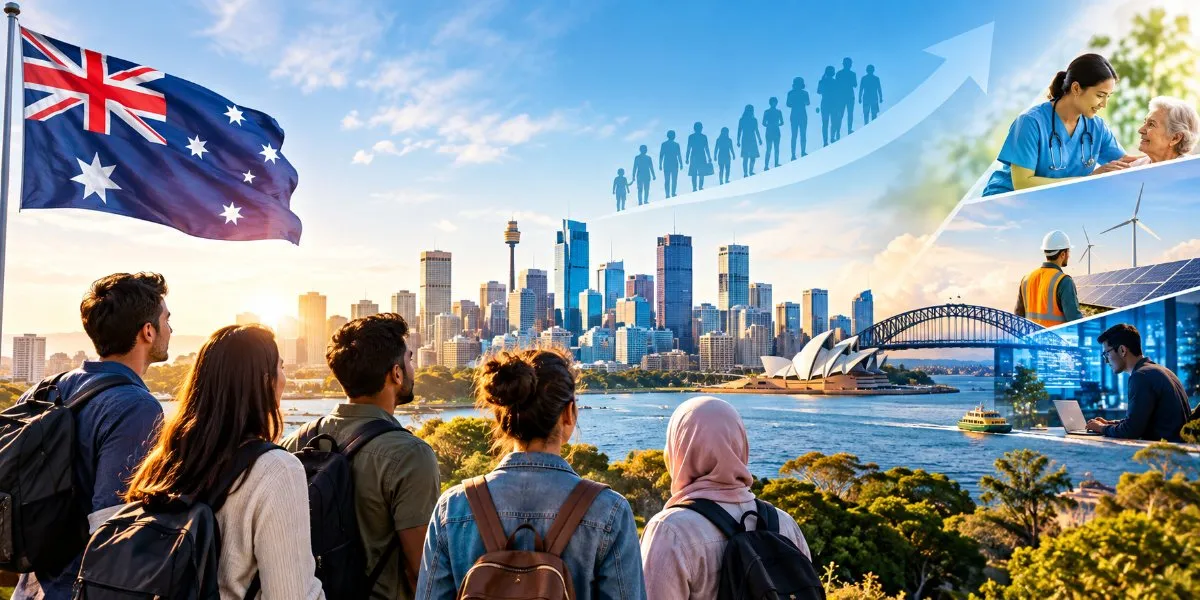
Australia has a report that looks far into the future. It is called the Intergenerational Report. The government writes a new one every three years, and it looks 40 years ahead. The newest report has a clear message. Australia will need people from other countries to keep growing. This post explains the main ideas in simple English.
The big picture
Families in Australia are having fewer children. The report expects the fertility rate to fall to 1.34 births per woman by 2065–66. In the last report, the number was 1.62. Around the 2060s, more people will die each year than are born.
Still, the population is expected to reach 39.3 million by 2065–66. Why? Because of migration. The report assumes that net overseas migration will average 235,000 people a year over a long time.
Why younger people matter
A recent migrant is about 26 years old on average. Other residents are about 38. Because newcomers are younger, the group of people aged 15 to 64 can keep growing. In many other countries, this group is getting smaller.
Australia is also getting older. The median age may rise from 38.6 to 45 by 2062–63. The number of people aged 65+ will nearly double. The number aged 85+ will nearly triple. Older people need more health care and aged care. That means more workers are needed.
Where skills may be needed
- Care work: nurses, aged care workers, disability support staff and health professionals.
- Clean energy: Australia has a net zero target of 2050. This needs engineers, technicians and tradespeople.
- Digital skills: artificial intelligence will change work, but the report says the results are still uncertain.
- Service jobs: the economy is moving more towards services.
These are directions, not a promise of a job. You still need an employer, a visa and the right papers.
Be careful: the number can change
The 235,000 figure is an assumption. It is not a promise. The Opposition and One Nation have both said they would want much lower migration if they win. So rules can change, and you should always check the latest information.
The economy looks stable in the report. Growth is expected to slow from about 3% a year to about 2%. Even so, the economy may be more than twice its present size by 2065–66. The report also mentions problems, such as the cost of housing for younger people.
What you can do now
- Look at your skills. Is your work in care, energy, technology or services?
- Learn how your qualification is treated. Vietnamese vocational certificates and degrees are usually assessed again in Australia. This happens through a skills assessment, but only when your job or visa asks for it.
- Plan an English test. If you need IELTS or PTE, give yourself time to study and book.
- Prepare papers. Get certified English translations of your Vietnamese documents when the visa rules ask for them. If a police certificate is requested, you will usually need the Judicial Record Certificate No. 2 (Phiếu lý lịch tư pháp số 2).
Please stay safe. Deal only with licensed organisations and real employers. Never pay an unlicensed broker, and be careful with anyone who asks for money upfront to secure a job or a visa.
Visa rules change, so check the Department of Home Affairs website for the current position. Start early, and take one step at a time.
#australia #forecast #migration #care jobs #skills #vietnamese workers
 Australia's migration cuts are only a proposal: a clear guide for Vietnamese workers
 Is Australia busier than ever? What a record year means for Vietnamese workers
 Vietnamese boilermakers and fabricators: could the Australian welding gap suit you?