Vietnamese students: why is Australia's 485 graduate visa under debate?
Visa guide · 2026-08-19 · 3 min read

Do you want to study in Australia and then work there? Then you may hear about the subclass 485 visa. It is called the temporary graduate visa. It is in the news because many people are arguing about it. This guide explains the debate in simple words.
What is the 485 visa?
The 485 visa lets an international graduate stay in Australia after study. During this time the graduate can look for skilled work. Right now, a person who finishes a two-year course and is under 35 can qualify almost automatically. No job offer is needed. It has become one of the fastest-growing visa types.
Who holds the visa?
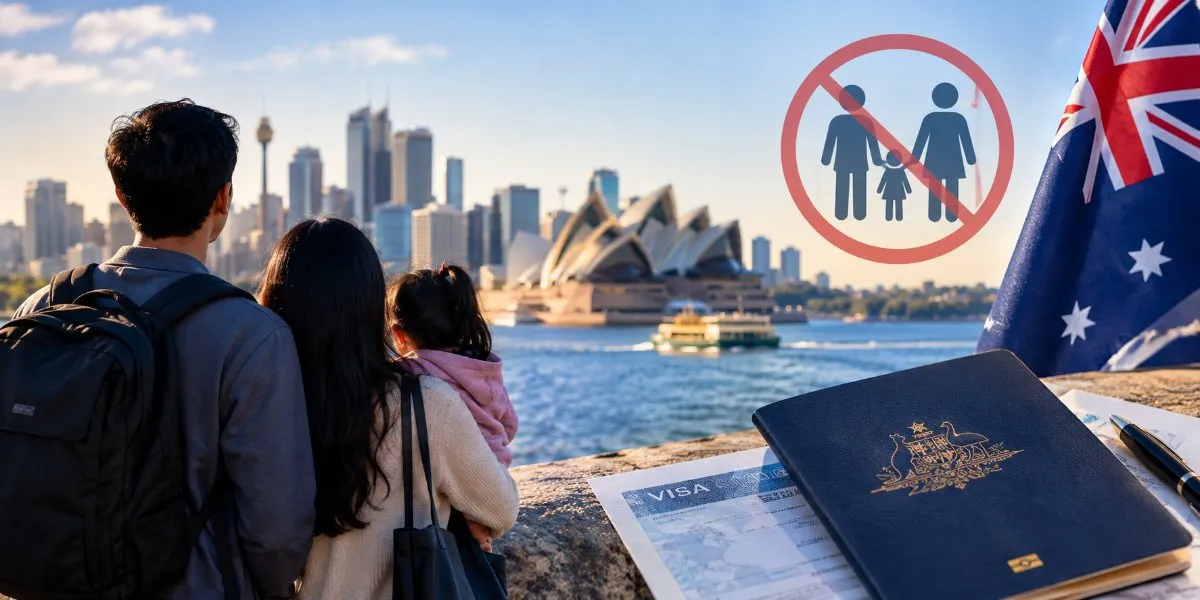
Some visa holders are not the graduate. They are a husband, wife, partner or child who came with the graduate. These people are called secondary applicants. A dependant is a family member who travels with the main visa holder.
A researcher in higher education says about one in five holders is a secondary applicant. For graduates from countries such as India, Nepal, Pakistan, Bhutan, Sri Lanka and the Philippines, the figure is closer to one in three. Newer estimates say close to 27% of all holders are secondary applicants, and that this group has grown by more than 200% since 2022. Today there are about 271,000 holders. Across all student and graduate visas, about 800,000 people are in Australia.
Why work rights matter
A partner on a 485 visa can work with the same rights as the main holder. There is no hours limit and no rule about the field of work. A student has a limit of 48 hours every two weeks during the semester. Yet the student's partner can work any hours.
Critics say this means one application can bring two full-time workers. Only one of them has gone through study and skills checks. They also say the United Kingdom stopped most international undergraduates from bringing dependants in January 2024, and Australia has not done the same.
What ideas are being discussed?
These are only ideas from commentators. They are not government rules.
| Idea | What it would mean |
|---|---|
| End dependant rights for undergraduates | Undergraduate students would not bring family members automatically. |
| Link the 485 to a job offer | Only graduates with a relevant job offer could apply. |
| Link partner work rights to skill level | A partner's right to work would follow the main applicant's skill group. |
People who support tighter rules often point to the 2023 Migration Review. It found that more than half of bachelor's-degree graduates were still in low-skilled work three-plus years after graduating.
What can you do?
- Choose a course that leads to a job employers need. A job offer is what some of the ideas would ask for.
- Keep your certificates safe. Vietnamese degrees and vocational certificates are usually assessed again abroad.
- Plan an English test. You may need IELTS or PTE for your visa or your course.
- Prepare certified English translations of your Vietnamese documents when the visa rules ask for them.
- If a police certificate is requested, the usual one for Vietnamese citizens is the Judicial Record Certificate No. 2 (Phiếu lý lịch tư pháp số 2).
Keep your money safe
When rules are unclear, some people offer "easy" routes. Deal only with licensed organisations and real education providers. Never pay an unlicensed broker, and be careful with anyone who asks for money upfront to "secure" a place or a visa.
For today's rules, read the official visa listing from the Australian government. It is the best place to check what is true now.
#vietnamese students #graduate visa #subclass 485 #study in australia #student visa #work rights
 Studying in Australia with your family? Vietnamese students, here is what could change
 Studying in Australia from Vietnam? A proposal could end the post-study work visa
 Vietnamese students: changing courses in Australia is about to get harder